Rajvi Palace

Pankaj Techqart

Kalibangan Travel Guide History, Archaeological Site, Museum & How to Reach

Kalibangan Travel Guide: History, Archaeological Site, Museum & How to Reach

The first time I walked up the mound at Kalibangan, I was underwhelmed for about ninety seconds. No gateway, no restored fort wall, no crowd -just low earthen rises, weathered brick, and a hot wind off the dry Ghaggar bed. Then the guard pointed at a fenced patch of ground and mentioned, almost casually, that those faint criss-cross lines are the oldest ploughed field ever found on earth. That’s Kalibangan. It doesn’t perform for you. It rewards you for knowing what you’re looking at -which is what this Kalibangan travel guide is for. Where Is Kalibangan? Kalibangan is in Hanumangarh district, Rajasthan, on the southern bank of the dried-up Ghaggar (ancient Sarasvati) river, roughly 5 km from Pilibanga town and about 25 km from Hanumangarh city. It ranks with Lothal and Dholavira among the most important Indus Valley Civilization sites excavated in India, and is the only major Harappan city in Rajasthan. Detail Information State / District Rajasthan / Hanumangarh Nearest town Pilibanga (~5 km) River Ghaggar (identified with the Vedic Sarasvati) Civilization Indus Valley (Harappan) Main period c. 3500-1750 BCE (Pre-Harappan + Mature Harappan) Excavated by ASI, 1961-1969 Museum Archaeological Museum, Kalibangan (est. 1983) Best season October to March Kalibangan History: Two Cities Stacked on One Mound What makes Kalibangan history unusual is that you aren’t looking at one settlement. You’re looking at two, separated by a catastrophe.The Italian Indologist Luigi Pio Tessitori first noticed the mounds around 1917-19 while surveying Rajputana, though he died before anyone grasped what he’d found. Decades later Amalananda Ghosh of the Archaeological Survey of India recognised the pottery as Harappan during his Ghaggar valley surveys. Full-scale excavation ran from 1961 to 1969 under B. B. Lal and B. K. Thapar -nine seasons, the longest continuous dig at any Indian Harappan site at the time. The sequence they found:The Pre-Harappan town (c. 3500-2800 BCE). A modest fortified settlement of mud-brick houses with a pottery tradition of its own. Its people farmed the floodplain, kept cattle, and used copper, carnelian and steatite beads.The break. Excavators recorded displaced walls and shifted strata pointing to a seismic event around 2700 BCE -one of the earliest archaeological signatures of an earthquake found anywhere in the world. The town was abandoned.The Harappan city (c. 2700-1750 BCE). New occupants rebuilt on the same ground in the full mature Harappan idiom: a fortified citadel to the west, a walled lower town to the east, streets on a grid. Then the Ghaggar dried. No invasion, no burning layer -just the water walking away. The city followed it. Why the Kalibangan Archaeological Site Matters Ask most people about the Indus Valley and they’ll mention Mohenjo-daro’s Great Bath or Harappa’s granaries. The Kalibangan site earned its textbook place for four discoveries found nowhere else so clearly. 1. The world’s earliest ploughed field. Beneath the Pre-Harappan layer lies a field with furrows running in two directions -a wide-spaced set crossing a narrow-spaced set at right angles. That’s a deliberate intercropping grid. Farmers in northern Rajasthan still use almost identical spacing for mustard and gram. Five thousand years, same logic. 2. Fire altars. Rows of brick-lined pits holding ash, charcoal, terracotta cakes and sometimes animal bones -on a raised citadel platform and inside ordinary homes. They are the strongest physical evidence in the Harappan world for organised ritual, and among the most debated finds in South Asian archaeology. 3. Evidence of surgery. A skull from the cemetery shows trephination -a hole cut deliberately into bone, with healing around the edges. The patient lived. That is Bronze Age neurosurgery. 4. Three burial customs at once. Extended inhumation, pot burials and rectangular or circular grave pits, all in use simultaneously -a population culturally mixed rather than uniform. What You’ll Actually See Today Be realistic and you’ll enjoy it far more. Kalibangan is a conserved excavation, not a restored monument -much of what was dug up was backfilled to protect it from the region’s brutal summers. Expect two mounds: the citadel (KLB-1) to the west, the larger lower town (KLB-2) to the east, with exposed mud-brick wall stubs, street alignments, drain lines and the protected ploughed-field enclosure. Allow 45 minutes to an hour. Go early, around 8-9 am. The low sun throws shadows into the wall foundations and the grid suddenly makes sense in a way it doesn’t at noon. Kalibangan Archaeological Museum The ASI museum, set up in 1983 a few hundred metres from the mounds, is small -three galleries -and well curated. Gallery one holds Pre-Harappan material: painted pottery, beads, bangles. Gallery two covers the Harappan city: seals with Indus script, stone weights in their standard binary ratios, terracotta figurines, the charging bull, and the shell and terracotta bangles that gave the place its name. Gallery three displays skeletal remains and grave goods. Give it 30-40 minutes and read the labels -they carry excavation-season detail no signboard outside repeats. Practical note: like most ASI site museums it runs roughly 9 am to 5 pm with a weekly closing day, and entry is nominal. Timings shift seasonally, so call the Hanumangarh tourist office or ASI’s Jodhpur Circle first. How to Reach Kalibangan Mode Route Notes Train Pilibanga station (~5 km) Best option. On the Bathinda-Suratgarh line; autos wait outside Train (major) Hanumangarh Junction (~25 km) Far better connectivity; hire a taxi from here Road NH-62 via Hanumangarh or Suratgarh Roads are decent; a private car is ideal Air Bikaner (~205 km), Jaipur (~310 km) Bikaner is nearer; Jaipur has more flights From Delhi ~400 km, 7-8 hrs by road Overnight train to Hanumangarh is easier There is no public transport to the site gate. Get to Pilibanga or Hanumangarh, hire an auto or taxi, and -this matters -ask the driver to wait. You will not find a return ride at the mounds. Best Time to Visit and Practical Tips October to March. May and June regularly cross 45°C on open, shadeless mounds, and there is no café, shop or reliable water point at the site. Carry two

Kalibangan Travel Guide: History, Archaeological Site, Museum & How to Reach Read More »

Best Places to Visit Near Hanumangarh Within 100 KM

Best Places to Visit Near Hanumangarh Within 100 KM

Most people pass through Hanumangarh on the way to somewhere else -Bikaner, Amritsar, the Punjab border. That is a mistake I made on my first trip too. I gave the town half a day, stood on a brick rampart older than most of Europe’s cathedrals, and realised I had budgeted wrong. Within a 100 km radius sits the world’s oldest ploughed field, a 1,700-year-old brick fort, a seasonal lake where Timur once camped, and a gurdwara built around a story about a pigeon. This guide covers the Hanumangarh tourist places worth your fuel, with honest distances and what each one actually offers. What to see near Hanumangarh The best places to visit near Hanumangarh within 100 km are Bhatner Fort (in town), the Harappan site and museum at Kalibangan (about 28 km), Mata Bhadrakali Temple (roughly 8 km), the Rang Mahal mound near Pilibanga (around 30 km), Talwara Lake in Tibbi tehsil (about 45 km), Sri Ganganagar city (around 60 km) and Gurudwara Shri Kabootar Sahib at Nohar (approximately 85 km). Two full days covers all of them comfortably. Distance chart at a glance Place Approx. distance Drive time What it’s for Time needed Bhatner Fort 1–2 km 5 min History, photography 1–2 hrs Mata Bhadrakali Temple 8 km 15 min Pilgrimage, Ghaggar views 1 hr Sila Mata–Sila Peer 10 km 20 min Shared faith shrine 30–45 min Kalibangan + Museum 28 km 45 min Archaeology, Indus Valley 2–3 hrs Rang Mahal (Pilibanga) 30 km 50 min Excavation mound 1 hr Talwara Lake 45 km 1 hr Birding, monsoon landscape 1–2 hrs Sri Ganganagar 60 km 1.5 hrs Food, kinnow belt, shopping Half day Suratgarh 68 km 1.5 hrs Farm country, canal drives 2–3 hrs Nohar (Kabootar Sahib) 85 km 2 hrs Sikh heritage 2 hrs Distances are road distances from Hanumangarh Junction and vary slightly by route. 1. Bhatner Fort -where the town’s name comes from You cannot understand Hanumangarh Rajasthan without standing inside Bhatner. King Bhupat of the Bhati dynasty raised it in 295 AD in memory of his father, Rao Bhatti, which makes it one of the oldest surviving brick forts in India. It sprawls across roughly 52 bighas on the bank of the Ghaggar, with a dozen bastions along each face. The list of people who wanted it is the real story. Timur took it in 1398 and called it one of the strongest and most secure forts in India -high praise from a man who took a great many forts. Control shifted through the Johiyas, the Chayals, and finally to Surat Singh of Bikaner in 1805. He captured it on a Tuesday, Hanuman’s day, renamed it Hanumangarh, and that name stuck to the town. What to look for: the tomb of Sher Khan inside the walls, the old Jain shrine, and the brickwork itself -laid without cement, still holding. Practical tip: Go after 4 pm -the brick turns amber and the walls stop radiating heat. It is ASI-protected, so tripods and drones need clearance. 2. Kalibangan -the world’s oldest ploughed field If you ask what Hanumangarh is famous for, this is the answer that carries weight internationally. Kalibangan means “black bangles” in Bagri, after the fragments villagers kept turning up. Amalananda Ghosh identified it as Harappan in the early 1950s; B.B. Lal directed excavations from 1961 to 1969. What came out of the ground changed textbooks. A criss-cross furrow pattern dated to around 2800 BC is the earliest attested ploughed field found anywhere -and farmers in the surrounding fields still plough in that same grid. There are fire altars here that appear at no other Indus site, and a citadel mound and lower town separated the way Mohenjo-daro’s were. The ASI museum, set up in 1983, holds three galleries of pre-Harappan and Harappan material -seals, terracotta, bangles, pottery. Typical hours are 9 am to 5 pm, usually closed on Friday, with a nominal ticket. Ring ahead; small ASI museums keep flexible hours. Honest expectation setting: the site itself is mounds and marked trenches, not standing architecture. Read the museum first, then walk the mound. Do it the other way round and it looks like a field. 3. Mata Bhadrakali Temple and Sila Mata – Sila Peer About 8 km out on the Ghaggar’s bank, the Bhadrakali temple is the district’s busiest shrine -an ancient foundation under a rounded shikhar, drawing steady crowds through Navratri. Weekday mornings are calm. Closer to town, Sila Mata–Sila Peer is quieter and, to me, more interesting: a single shrine venerated by Hindu and Muslim families alike, one of those small places that has been doing interfaith harmony for centuries without a word of publicity. 4. Rang Mahal -the dig most visitors miss Near Pilibanga, roughly 30 km out, a Swedish team from Lund University led by Hanna Rydh worked this mound in 1952–54. Their finds were distinctive enough that archaeologists named a whole regional culture after the site. There is no ticket counter and no signage worth the name -bring a local guide or your own reading. 5. Talwara Lake -the district’s only lake Out in Tibbi tehsil, Talwara Jheel fills when the Ghaggar-Hakra floods in monsoon and holds water for a few months. That makes timing everything: come between August and January and you get open water and migratory birds; come in May and you get a cracked bed. Historians have argued the Tarain battlefields lay in this area, and Timur is recorded camping on these banks in 1398–99. 6. Sri Ganganagar and Suratgarh -the canal country Sri Ganganagar, about 60 km on, is a planned grid city built on the Gang Canal; its kinnow orchards are worth a detour in December and January when the fruit comes in. Suratgarh, 68 km south, sits in mechanised-farm country -flat, green, and unlike anything most people picture when they hear “Rajasthan.” 7. Gurudwara Shri Kabootar Sahib, Nohar Around 85 km south, this gurdwara marks Guru Gobind Singh’s stay near Nohar in November 1706. A Sikh in his party accidentally crushed

Best Places to Visit Near Hanumangarh Within 100 KM Read More »

Why Rajasthan Is India's Favorite Destination Wedding Location

Why Rajasthan Is India’s Favorite Destination Wedding Location

There’s something about exchanging vows under a canopy of fairy lights in a 500-year-old courtyard that no banquet hall can replicate. Maybe it’s the way sandstone walls glow amber at sunset. Maybe it’s the echo of shehnai bouncing off arched corridors that once hosted maharajas. Whatever the reason, couples across India -and increasingly from around the world -keep circling back to one state when the wedding conversation turns serious. A destination wedding in Rajasthan isn’t a trend anymore. It’s practically a tradition of its own. Over the past decade, Rajasthan has pulled ahead of Goa, Kerala, and Uttarakhand in the destination wedding race, and the gap keeps widening. Wedding planners estimate that roughly 40–45% of all destination weddings in India now take place somewhere in this desert state. That’s a staggering number when you consider how many stunning options the country offers. So what makes Rajasthan the undisputed champion? Having spent years covering the Indian wedding industry and speaking with planners, hoteliers, and couples who’ve actually done it, I can tell you it’s not just one thing. It’s a combination of heritage, infrastructure, visual drama, and -surprisingly -value for money at certain price points that gives Rajasthan an edge nobody else has managed to match. The Real Reasons Rajasthan Dominates Destination Weddings 1. Heritage That Money Can’t Manufacture You can build a luxury resort anywhere. What you can’t build is four centuries of history baked into the walls. Rajasthan’s biggest advantage over every other destination wedding location in India is its unmatched collection of palaces, forts, and havelis that have been converted into functional wedding venues. These aren’t replicas or themed properties. They’re the actual residences of Rajput royals, Marwar chieftains, and Mewar aristocrats -now restored, equipped with modern amenities, and available for ceremonies. When couples choose a royal wedding in Rajasthan, they’re stepping into living history. The architecture, the frescoes, the jharokha windows, the sprawling courtyards -none of it was designed for Instagram, but all of it performs spectacularly on camera. That authenticity is irreplaceable. A five-star hotel in Goa might have nicer bathrooms, but it can’t give you the feeling of walking through the same corridors that a queen once did. 2. Weather That Actually Cooperates Rajasthan’s wedding season -roughly October through March -delivers some of the most reliable weather in the country. Clear skies, cool evenings, and virtually zero rain during these months. For outdoor ceremonies, mehendi by the poolside, or sangeet nights under the stars, this predictability is worth its weight in gold. Compare that with Kerala’s unpredictable monsoon tails, Goa’s humidity swings, or Himachal’s sudden cold snaps. Rajasthan’s dry climate means fewer weather-related backup plans, less stress, and more confidence that your outdoor mandap setup won’t need a last-minute tarp. 3. A Venue for Every Budget (Seriously) People assume a palace wedding in Rajasthan requires a Bollywood-sized budget. That’s only partially true. Yes, places like Umaid Bhawan Palace and The Leela Palace Udaipur will run you into crores. But Rajasthan’s wedding venue ecosystem is incredibly deep. Here’s how the pricing landscape actually breaks down: Budget Tier Approximate Cost (2-Day Wedding, 150–200 Guests) Example Venue Types Ultra-Luxury ₹1.5 Cr – ₹5 Cr+ Umaid Bhawan, Taj Lake Palace, The Leela Premium ₹50 Lakh – ₹1.5 Cr Boutique heritage hotels, Fairmont, ITC Rajputana Mid-Range ₹15 Lakh – ₹50 Lakh Converted havelis, resort properties, heritage hotels in smaller cities Budget-Friendly ₹5 Lakh – ₹15 Lakh Farmhouses, smaller heritage properties, venues in Hanumangarh, Bikaner, Bundi That bottom tier surprises most people. Not every destination wedding in Rajasthan needs to happen in Udaipur or Jaipur. Smaller cities like Hanumangarh, Mandawa, Bundi, and Dungarpur offer gorgeous heritage properties at a fraction of the cost -with hospitality that often feels more personal and attentive. 4. Unmatched Visual Drama Let’s be honest: weddings are visual events now. Between professional photography, drone shots, and social media, couples want backdrops that tell a story. Rajasthan delivers this better than anywhere else in India. Golden sand dunes at sunset. Mirror-still lakes reflecting ivory palaces. Blue-washed streets in Jodhpur. The pink cityscape of Jaipur. Ornate marble courtyards in Udaipur. Each city offers a completely different visual palette, which means no two Rajasthan weddings look alike -even if they’re in the same city. This visual richness is a massive reason why Rajasthan is famous for destination weddings among photographers and videographers too. The light quality in the desert is exceptional, particularly during golden hour, and the architectural details provide natural framing that doesn’t require elaborate set design. Best Places for Destination Weddings in Rajasthan: A City-by-City Breakdown Choosing between Rajasthan’s wedding cities is like choosing between diamonds. They’re all stunning, but each has a distinct personality. Here’s an honest assessment based on what each city actually delivers. Udaipur -The Romantic Powerhouse Udaipur remains the gold standard for luxury wedding venues in Rajasthan, and for good reason. The city’s lakes create a natural amphitheater effect, and properties like Jagmandir Island Palace, The Oberoi Udaivilas, and Fateh Prakash Palace offer settings that genuinely feel cinematic. Best for: Intimate to mid-sized weddings (100–300 guests), couples prioritizing aesthetics and photography, those with a premium or ultra-luxury budget. Watch out for: High season pricing spikes sharply (November–February). Minimum night requirements at top venues. Limited airport connectivity can complicate guest logistics. Jaipur -The All-Rounder Jaipur strikes the best balance between accessibility, variety, and heritage. The city has everything from palace hotels and fort venues to modern luxury resorts. It’s also well-connected by air and road, making guest logistics significantly easier. Some of the finest heritage wedding venues in Rajasthan sit within Jaipur’s boundaries -Samode Palace, Rambagh Palace, Chomu Palace, and Jai Mahal Palace among them. Best for: Large weddings (300+ guests), families wanting easier travel logistics, couples who want heritage charm without the remoteness. Watch out for: City noise can intrude at venues closer to the main roads. The sheer number of weddings happening simultaneously during peak season means vendor availability can be tight. Jodhpur -The Underrated Gem Jodhpur doesn’t get the attention Udaipur

Why Rajasthan Is India’s Favorite Destination Wedding Location Read More »

Things to Look for Before Booking a Luxury Hotel in Rajasthan

Things to Look for Before Booking a Luxury Hotel in Rajasthan

Rajasthan doesn’t just invite you -it pulls you in. The colours, the forts towering over desert landscapes, the stories stitched into every stone wall. And when you pair that experience with a luxury stay, the whole trip shifts from ordinary tourism to something you’ll talk about for decades. But here’s the catch. Not every property calling itself a “luxury hotel in Rajasthan” actually delivers what you’d expect. I’ve seen beautifully photographed palaces with crumbling bathrooms, five-star promises with three-star service, and heritage properties where “heritage” simply meant old plumbing with no upgrades since the 1970s. So before you hand over your credit card, there are specific things worth checking. This guide breaks down exactly what to look for -drawing on real traveller experiences, hospitality industry standards, and the unique quirks of Rajasthan’s hotel landscape -so you book a place that genuinely matches the price tag. Why Rajasthan Stands Out for Luxury Travel Rajasthan is one of the few destinations on earth where luxury accommodation isn’t just about thread counts and marble lobbies. It’s about sleeping inside 400-year-old palaces, dining under open skies in the Thar Desert, and waking up to peacocks wandering the grounds of a former maharaja’s estate. The state offers a rare blend of heritage and modern comfort that few places globally can match. From converted forts in Jodhpur to lakeside palaces in Udaipur, luxury resorts in Rajasthan span a spectrum that includes boutique havelis, sprawling desert camps, and internationally branded five-star chains. That variety, however, also means the quality varies dramatically. Two properties sitting three kilometres apart in Jaipur can offer wildly different experiences despite charging similar rates. Which is precisely why a little homework before booking goes a long way. 1. Location and Accessibility Matter More Than You Think A stunning hotel loses its charm if reaching it eats up half your day or leaves you stranded far from the places you actually want to visit. What to check: Proximity to major attractions -If you’re visiting Jaipur, a property near the old city gives you easy access to Amber Fort, Hawa Mahal, and the City Palace. In Udaipur, lakeside locations near Pichola offer the most iconic experience. Airport or railway transfer distance -Some luxury resorts in Rajasthan sit 60-90 minutes from the nearest airport. That’s fine if you know it upfront. It’s frustrating when you don’t. Surrounding environment -A heritage hotel on a busy highway feels very different from one tucked into the Aravalli hills. Check satellite views, not just the property’s own photos. City Ideal Location for Luxury Stay Nearest Airport Key Attractions Nearby Jaipur Near Amer or Civil Lines area Jaipur International (15-25 min) Amber Fort, Nahargarh, Hawa Mahal Udaipur Lake Pichola surroundings Maharana Pratap Airport (25-35 min) City Palace, Jag Mandir, Saheliyon ki Bari Jodhpur Near Mehrangarh Fort Jodhpur Airport (10-20 min) Mehrangarh, Umaid Bhawan, Clock Tower Jaisalmer Inside or near the Fort area Jaisalmer Airport (15 min) Jaisalmer Fort, Sam Sand Dunes, Patwon ki Haveli Pushkar Lakeside properties Ajmer Junction rail (30 min) Brahma Temple, Pushkar Lake, Rose Garden Ranthambore Near the national park gates Sawai Madhopur rail (20-30 min) Ranthambore Tiger Reserve, Fort A quick tip from experience -if you’re planning a multi-city Rajasthan tour, pick hotels that sit along your natural route rather than backtracking for a “better” property. 2. Verify the Heritage Credentials (Not All “Heritage” Is Equal) Rajasthan is famous for its heritage hotels, and rightfully so. Staying in a converted palace or haveli adds a layer of cultural immersion that a standard chain hotel simply cannot replicate. But the label “heritage” gets used loosely. The Indian government classifies heritage hotels into three official categories: Classification Property Age Typical Features Heritage Built before 1950 Original architecture preserved, basic modernisation Heritage Classic Built before 1935 Significant historical value, period furniture, larger properties Heritage Grand Built before 1920 Exceptional historical importance, palatial scale, museum-quality interiors Before booking any heritage hotel in Rajasthan, check whether the property holds an official Heritage classification from the Ministry of Tourism. A genuine heritage stay will have documentation of its history, original architectural elements, and usually a story tied to a royal family or historical event. Properties that lack this classification aren’t necessarily bad -many privately owned havelis offer wonderful experiences -but knowing the difference helps you set realistic expectations. 3. Room Categories and What “Luxury” Actually Includes One of the most common disappointments with premium hotels in Rajasthan involves rooms categories. The base-level room at a luxury property can sometimes feel surprisingly compact, especially in heritage conversions where room sizes were dictated by century-old architecture. Before you book, dig into these details: Room size in square feet -Don’t just rely on photos. Ask for exact dimensions. A 250 sq ft heritage room and a 550 sq ft suite are completely different experiences. View from the room -Lake view, fort view, garden view, or parking lot view? This single detail can dramatically change your stay. Bathroom quality -This is where many heritage properties fall short. Modern fixtures, consistent hot water, rain showers, and quality bath amenities should all be non-negotiable at luxury price points. Bed configuration -Some older properties still use twin beds pushed together. If a king-size bed matters to you, confirm it in advance. Climate control -Rajasthan temperatures swing wildly. Summers push past 45°C; winters can drop to near freezing in the desert. Working air conditioning and heating aren’t optional. For couples especially, these details make or break the experience. The best hotels for couples in Rajasthan offer private balconies, bathtubs with views, and turn-down service with thoughtful touches -things that turn a nice stay into a memorable one. 4. Evaluate the Dining Options Thoroughly Rajasthani cuisine is one of the highlights of any trip to the state, and your hotel’s dining setup directly impacts how much of it you get to enjoy. What sets great hotel dining apart: Rajasthani speciality menus -Dal Baati Churma, Laal Maas, Ker Sangri, Gatte ki Sabzi. A luxury property in Rajasthan should celebrate local food, not

Things to Look for Before Booking a Luxury Hotel in Rajasthan Read More »

Select Kalibangan: History and What You’ll See There Kalibangan: History and What You’ll See There

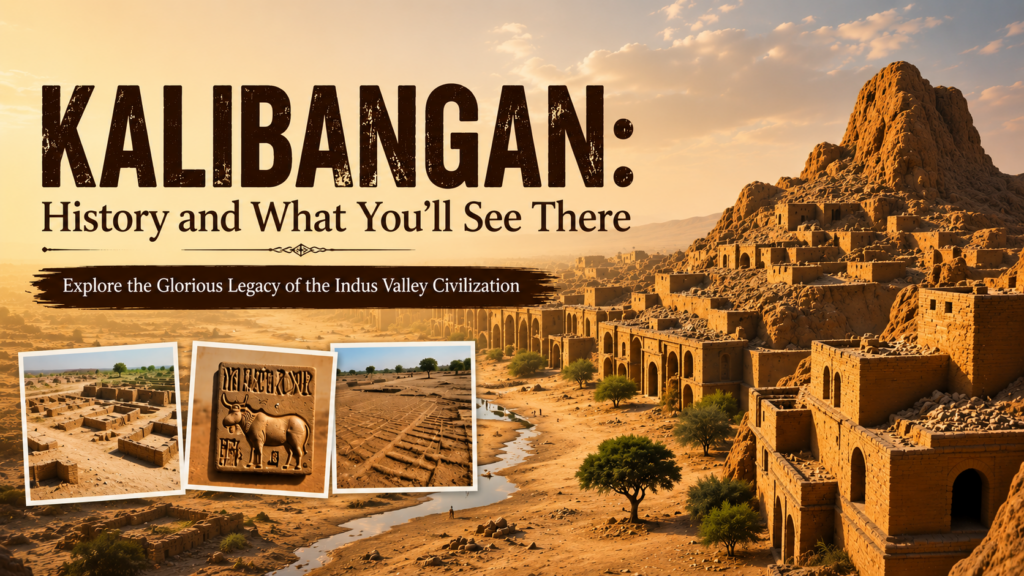
Kalibangan: History and What You’ll See There

There’s a ploughed field at Kalibangan that’s about 4,600 years old. Read that again. Not a wall, not a pot -a field. The actual furrows, criss-crossed in a grid, turned over by a farmer who’s been dead for the better part of five thousand years. It’s the oldest ploughed field anyone has ever dug up, anywhere. And it sits in a quiet corner of Hanumangarh district in Rajasthan that most people drive past without a second glance. That mismatch is sort of the whole point of Kalibangan. From the road it’s a couple of brown mounds next to a dead river. Underneath, it was a real city of the Indus Valley Civilization -planned, walled, lived in for centuries. The stuff that came out of the ground here ended up changing what historians thought they knew. So if you’re weighing up whether the trip is worth it, or you’re a student who keeps running into this place in textbooks, or you just like the idea of standing where people stood in 2500 BCE -this is the honest version. The history, and what you’ll genuinely find when you show up. What is Kalibangan, quickly? Kalibangan is a Harappan (Indus Valley) archaeological site on the dried bank of the Ghaggar River -the one a lot of scholars tie to the ancient Sarasvati -in Hanumangarh district, Rajasthan. People lived here from roughly 3500 BCE to 1750 BCE, across an Early Harappan settlement and a later Mature Harappan city. It’s best known for the earliest ploughed field on record, a strange row of fire altars, and the oldest earthquake we can read in the archaeology. You can walk the mounds and visit a small ASI museum close by. Where exactly is it? Up in the far north of Rajasthan, in Hanumangarh district, near a town called Pilibangan. It’s on the left bank of the Ghaggar-Hakra -a river that dried up ages ago and that many people link to the Sarasvati of the old texts. Distances, if you’re planning: about 25 to 30 km from Hanumangarh town, and only 5 to 8 km from Pilibangan railway station. Bikaner, the nearest proper city, is roughly 200 km off. The land around it is flat, dusty, full of wheat and mustard. Worth noticing, that -the same good floodplain soil that feeds today’s farmers is what pulled settlers here in the first place. So why “Kalibangan”? The name just means “black bangles.” Early on, people kept spotting dark terracotta bangle fragments lying around the mounds, and the name stuck. They were basically walking over the leftovers of a 4,000-year-old craft without knowing it. Turned out the bangles were the smallest hint of an entire buried town. A short history Who found it? Two stages, three people. First was Luigi Pio Tessitori, an Italian Indologist poking around Rajasthan in the early 1900s. He was meant to be studying old manuscripts, but the ruins near Kalibangan bothered him -they looked far too ancient. He decided they were prehistoric and pre-Mauryan, which was a wild thing to claim at the time, because nobody had even worked out that the Indus Valley Civilization existed yet. Tessitori died in 1919. Harappa wasn’t announced to the world until 1924. He was right and never got to know it. The second stage came after Partition in 1947. The big Harappan cities were now in Pakistan, so Indian archaeologists went hunting for sites of their own. Amlanand Ghosh of the ASI flagged Kalibangan as Harappan in the early 1950s. Then B.B. Lal and B.K. Thapar dug it properly from 1961 to 1969 -nine seasons of work. That’s what turned it from a hunch into one of India’s most important Harappan sites. Two cities stacked on top of each other This is the bit I find genuinely cool. Dig down at Kalibangan and you go through two separate cultures, one sitting on the other. The deeper, older layer is Early Harappan -roughly 3500 to 2600 BCE, tied to the Sothi-Siswal culture. A fortified little settlement, mud-brick houses, its own style of painted pottery. People farmed, kept cattle, lived behind a wall. On top of that is the Mature Harappan city, around 2600 to 1900 BCE, with all the classic Harappan trimmings: a grid plan, standard-size bricks, a walled citadel on the west, a separate walled lower town to the east. Stand on the site and you’re standing on the join between two ancient eras. Not many places in India let you see that handover so plainly. The earthquake Here’s the part people don’t expect. The Early Harappan settlement seems to have ended suddenly, around 2600 BCE -and B.B. Lal put it down to an earthquake. If he was right, that’s the earliest earthquake we can pin down from archaeology anywhere on Earth. A natural disaster from 4,600 years ago, still legible in shifted bricks and broken floors. The site sat empty for maybe a century before Harappans came back and rebuilt, this time with the two-part citadel-and-lower-town layout. Why did everyone leave? Slower story at the end than at the start. The Mature Harappan city wound down and was finally abandoned, almost certainly because the Ghaggar changed course and dried out. A Harappan town couldn’t survive without its river -drinking water, crops, trade, all of it ran on the water. Once the river went, the people went. That dry riverbed you’ll see today? That’s basically the reason the ruins are ruins. What actually makes Kalibangan a big deal Loads of Harappan sites have walls and broken pottery. Kalibangan stands out for a few finds you really don’t get elsewhere. The ploughed field is the headliner. Just outside the Early Harappan town wall, the diggers found a field with a cross-grid of furrows -one set spaced wide, another set crossing it closely at right angles. Oldest evidence of ploughing found so far, full stop. And the thing that gets me is the continuity. Farmers around here still plant two crops together in exactly that pattern: wide rows of

Kalibangan: History and What You’ll See There Read More »

Best Places to Travel Solo A Seasoned Traveler's Guide

Best Places to Travel Solo: A Seasoned Traveler’s Guide

Solo travel isn’t lonely. That’s the first myth worth putting to rest. After two decades of sending myself off with a backpack and no fixed plan, I’ve learned that the right destination does half the work for you -it introduces you to people, keeps you safe without you thinking about it, and hands you experiences you’d never chase in a group. If you’re wondering about the best places to travel solo, the short answer is below. But the real value is in why these places work, and how to plan a trip that feels effortless instead of stressful. The Best Places to Travel Solo The best places to travel solo are destinations that combine low friction (easy transport, walkable cities, English signage or a helpful local culture), a strong traveler community, and a genuine sense of safety. For first-timers, that means Rajasthan (India), Japan, Portugal, Thailand, and Georgia. For confident solo travelers, add Vietnam, Iceland, and New Zealand. Within India specifically, Rajasthan, Rishikesh, and Goa top the list because you’re rarely truly alone – the traveler trail is well-worn and welcoming. What Actually Makes a Destination Solo-Friendly Before I name places, here’s the filter I use. Get this right and almost any trip works. A great solo destination usually has four things going for it. It’s easy to move around, so you’re not stranded or overpaying for private transport. It has a social infrastructure – hostels, group tours, cafés, walking tours – where meeting people happens naturally. It carries a reasonable safety profile, especially for solo women. And it offers a mix of stimulation and stillness, so you can be busy when you want company and quiet when you want your own head. Notice what’s not on that list: exotic scenery, bucket-list monuments, cheap prices. Those are nice. They’re not what makes solo travel good. A gorgeous place with no way to meet anyone and no safe way to get around will leave you feeling more isolated than a modest one that gets the fundamentals right. The Best Places to Visit for Solo Travelers Here are the destinations I recommend most often, grouped by who they suit. For your very first solo trip Rajasthan, India. I’ll go deep on this below, because it’s one of the best places to visit for solo travelers on a budget who still want richness – forts, deserts, food, colour. The backpacker trail here is decades old, which means the hard parts are already solved. Japan. Almost unfairly easy. Trains run to the minute, crime is famously low, and eating alone at a ramen counter is completely normal -nobody blinks. Tokyo and Kyoto are ideal solo cities. The only real barrier is the language, and translation apps handle the rest. Portugal. Lisbon and Porto are walkable, affordable by Western European standards, and full of other solo travelers. Hostels are excellent, day trips are simple, and the pace is relaxed enough that you never feel rushed. For travelers ready to stretch a little Thailand and Vietnam. The classic Southeast Asian circuit exists for a reason. Cheap, warm, and packed with fellow travelers, so you’ll have company the moment you want it. Chiang Mai and Hoi An in particular are gentle introductions to the region. Georgia (the country). Tbilisi is a rising star -beautiful, inexpensive, safe, and still uncrowded. Wine country, mountains, and a hospitality culture that treats guests seriously. For confident, experienced solo travelers Iceland and New Zealand. Both reward independence. Rent a car, take the scenic route, and let the landscape do the talking. They’re expensive, and the “social” side is thinner, but for solitude with total safety, few places compare. Why Rajasthan Is One of India’s Best Solo Destinations Let me put my cards on the table: if you’re planning a first solo trip in India, a Rajasthan vacation is hard to beat. I’ve watched nervous first-timers arrive in Jaipur and leave three weeks later already planning the next one. The reason is the trail. Rajasthan has hosted independent travelers for generations, so hostels, group desert safaris, cooking classes, and share taxis are all established and easy to find. You meet people at breakfast without trying. And the state packs enormous variety into short train and bus rides -you’re never far from the next unforgettable thing. The best places to visit in Rajasthan A solo route through Rajasthan almost writes itself. These are the anchors: Jaipur (the Pink City). Your likely entry point. Amber Fort at opening time, Hawa Mahal’s honeycomb façade, the City Palace, and Nahargarh Fort at sunset. Great hostels and an easy city to find your feet in. Udaipur (the City of Lakes). Romantic even when you’re on your own -and that’s the point. Rooftop cafés over Lake Pichola, the sprawling City Palace, and slow mornings that solo travelers savour. Jodhpur (the Blue City). Mehrangarh Fort towers over an ocean of indigo houses. The old town is a maze made for wandering with no agenda. Jaisalmer (the Golden City). The desert climax. A camel safari and a night under the stars on the Sam sand dunes is where solo trips turn into stories you tell for years. Pushkar. A small, walkable holy town with a laid-back traveler scene -an easy place to slow down between the big cities. That loop -Jaipur, Udaipur, Jodhpur, Jaisalmer, Pushkar -is the spine of a great two-week Rajasthan vacation, and each stop has a ready-made community of other travelers. The best time to visit Rajasthan Timing matters here more than almost anywhere. The best time to visit Rajasthan is from October to March, when winter days are pleasant and evenings are cool. This is peak season for good reason: you can actually explore forts and deserts without wilting. Avoid April to June unless you tolerate extreme heat well -temperatures routinely climb past 40°C, and the desert becomes genuinely punishing. July to September brings the monsoon, which greens the landscape and thins the crowds, but expect intermittent rain. For a first Rajasthan vacation, aim for November

Best Places to Travel Solo: A Seasoned Traveler’s Guide Read More »

Planning a Wedding in Hanumangarh - Venues, Tips, and Why Rajvi Palace Is the Right Call

Planning a Wedding in Hanumangarh – Venues, Tips, and Why Rajvi Palace Is the Right Call

Wedding in Hanumangarh has unique considerations that don’t apply in larger Rajasthani cities with established wedding tourism infrastructure. Guest accommodation is often the biggest logistical challenge and finding a venue that can handle both the celebration and the guests’ stay in one location is, in Hanumangarh’s current hospitality landscape, essentially a question about Rajvi Palace. This guide covers what you need to know before you start booking anything. The Hanumangarh Wedding Context Weddings in Hanumangarh range from intimate family affairs of 50–75 guests to large celebrations of several hundred. The city has a traditional wedding culture rooted in Rajasthani and Punjabi customs with the cross border proximity to Haryana and Punjab meaning that many Hanumangarh weddings blend multiple regional traditions into multi day celebrations. The practical challenge for wedding hosts and planners is that the best hotels in Hanumangarh for accommodation are a short list, and the properties that combine guest accommodation with event facilities are shorter still. Rajvi Palace is the primary answer to both requirements. Why Having Venue and Accommodation Together Matters Anyone who has coordinated a multi-day wedding knows the logistics of splitting venue and accommodation across different locations. Guests need transport between venues, check-in and check-out coordination becomes a complex exercise, and the spontaneity of wedding celebrations the midnight gathering, the impromptu music after dinner is constrained when guests have to catch a vehicle back to a hotel a kilometre away. When the wedding venue and the guest hotel are the same property, everything simplifies. Rajvi Palace’s Weddings facility is on the same grounds as its hotel accommodation, meaning wedding guests staying at the property can walk from their room to the celebration and back without the logistical layer that most Hanumangarh weddings currently navigate. Wedding Planning Checklist for Hanumangarh Book the venue early: Rajvi Palace’s wedding facilities are in demand, especially for the winter wedding season (November–February) and Navratri periods. Confirm the date at least 3–4 months in advance for peak dates. Block a room allocation: Discuss room blocking for outstation guests with the hotel management a defined number of rooms held for your wedding party at agreed rates prevents availability surprises. Clarify catering arrangements: Rajvi Palace’s kitchen handles event catering confirm the menu, dietary accommodations, and service style for each function (mehndi, sangeet, pheras, reception). Plan for multi day events: Most Hanumangarh weddings span 2–3 days. Plan check-in and check-out dates for guest accommodation that provide a buffer before and after each function. Coordinate vendor access: Decorators, photographers, and music vendors will need property access and coordination. Discuss this with the hotel management during planning rather than on the day. The Heritage Backdrop Why It Makes Weddings Special Wedding photography in Hanumangarh gets a natural upgrade at Rajvi Palace. The property’s heritage architecture built with a connection to the Rajput royal tradition provides a backdrop that is genuinely distinct from a generic banquet hall or modern hotel building. For couples who want their wedding photos to look like they happened somewhere that actually means something, Rajvi Palace’s aesthetic is a significant advantage. Frequently Asked Questions Q1: What is the capacity of the wedding venue at Rajvi Palace, Hanumangarh? Ans: For specific capacity figures, guest accommodation availability, and wedding package pricing, contact Rajvi Palace directly through rajvipalace.com/weddings. The property handles weddings from intimate celebrations to larger multi day events and can provide detailed capacity and logistics information based on your specific requirements and date. Q2:Is Rajvi Palace the best wedding venue in Hanumangarh? Ans: Rajvi Palace is widely regarded as the best wedding venue in Hanumangarh for events that combine guest accommodation and celebration facilities in a single heritage property. The hotel’s royal family background, banquet facilities, in house kitchen, and hotel accommodation make it the most comprehensive wedding option available in Hanumangarh, Rajasthan. → Plan Your Hanumangarh Wedding at Rajvi Palace Make your wedding in Hanumangarh unforgettable with Rajvi Palace’s heritage venue and complete accommodation facilities. Visit rajvipalace.com/weddings or call to discuss your requirements. 

Planning a Wedding in Hanumangarh – Venues, Tips, and Why Rajvi Palace Is the Right Call Read More »

Which room is best for your stay: Standard, Deluxe, Super Deluxe, or Rajvi Suite?

Which room is best for your stay: Standard, Deluxe, Super Deluxe, or Rajvi Suite?

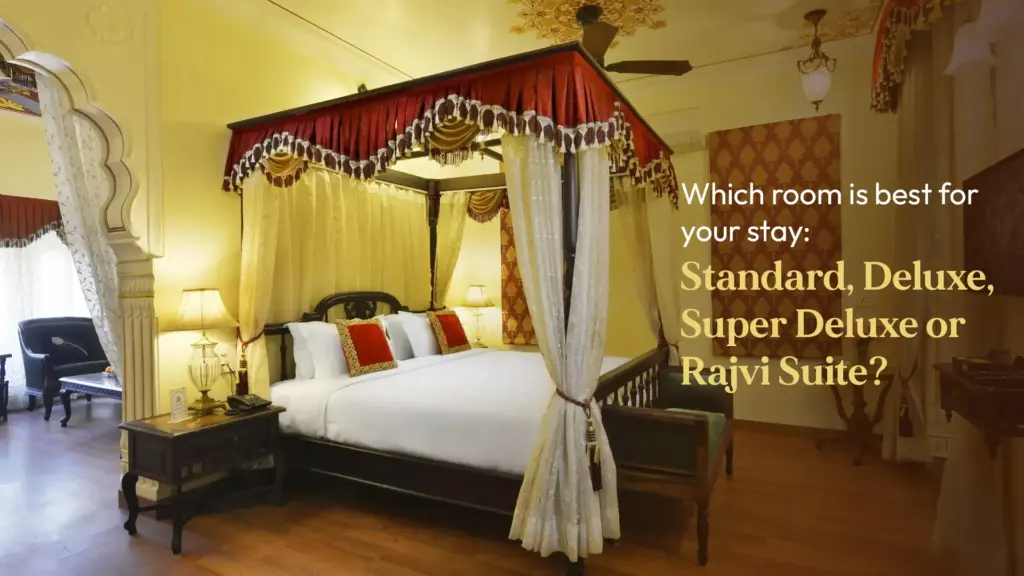
You have made the choice to go to Hanumangarh. You have located Rajvi Palace. Now comes the question that every guest quietly thinks about when they book: which room should I really pick? It is a more honest question than it seems. There is no one definition for the terms “Standard,” “Deluxe,” “Super Deluxe,” and “Rajvi Suite” that are used in the hotel industry. A “deluxe room” at one hotel may mean something completely different than it does at another. If you’re going on a trip for a specific reason, like a family trip, an anniversary getaway, a business stay, or a wedding celebration, the room you choose will affect the whole trip. This guide tells you exactly what you get in each category at Rajvi Palace, so you can book with full knowledge and no surprises. First, let’s talk about why room categories are important. At a hotel like Rajvi Palace, the difference between room types isn’t just how big they are or how many pillows they have. The overall quality of the experience includes the view from the window, the size of the bathroom, the amenities that come with the room, the atmosphere of the space, and how much room you have to relax and breathe after a long day of meetings or travel. Choosing a room that doesn’t meet your needs will make your trip less enjoyable. Everything seems easy when you pick the right one. So this is how it breaks down. The Standard Room: Clean, Comfortable, and Just What You Need The Rajvi Palace Standard Room is based on one idea: comfort that works without being too complicated. This room has everything you need if you’re in Hanumangarh for business, on a quick overnight stop while travelling through Rajasthan, or on a short solo trip to see Bhatner Fort and the Kalibangan site. What you get: a clean, well kept room with air conditioning, a comfortable bed, an attached bathroom with hot water, a TV, Wi-Fi and daily cleaning. The Standard Room at Rajvi Palace is not a compromise. It’s a clean, well kept place where you can sleep well and wake up feeling rested. The hotel’s heritage style and attentive service are the same in all room types. Best for: people travelling alone, business travellers on a focused trip, people who are just passing through, and people who spend most of their time outside the room exploring the city. If you’re arriving late and leaving early, or if the main reason for your trip is meetings or sightseeing instead of relaxing, the Standard Room is a good choice because it doesn’t make you pay for space you won’t use. The Deluxe Room gives you more space, comfort, and you. When you walk into the Deluxe Room, the first thing you notice is how big it is. This type has a bigger floor area, a better bathroom with better fittings and more storage, and a seating arrangement that is much more comfortable. The Deluxe Room is where the experience goes from useful to truly enjoyable if you are going to be in the room for a long time, like working on your laptop, relaxing after a long trip, or sharing the space with a partner. The Deluxe Room at Rajvi Palace is the most popular choice for couples on their first visit, families passing through northern Rajasthan, and guests attending events or weddings at the hotel who want a comfortable place to stay for two to three nights. Best for: couples, business trips with two people, leisure travellers who want a comfortable stay, and guests who are going to events at the hotel. The Super Deluxe Room: When Comfort Turns into Luxury The Super Deluxe Room is where the experience goes from being comfortable to being truly luxurious. Bigger than the Deluxe, with high-end furniture, better bathroom amenities, and the kind of attention to detail that makes you feel like the room was made just for you. This is the best room type for anniversaries, honeymoon nights, romantic getaways, guests coming for a special family event, or travellers who know from experience that spending a little more on a room makes the difference between a good trip and one they remember fondly. The Super Deluxe Room at Rajvi Palace has the heritage elegance that defines the property. It has richer interiors, a more curated look, and the quiet luxury that the former royal family’s vision intended when they built the property. Best for: anniversaries, honeymoons, guests who are attending weddings at the property and want to be comfortable for a few days, and picky travellers who value space and high quality finishes. Travel tip: Guests who book a Super Deluxe Room at Rajvi Palace for two nights to celebrate their anniversary always say in their reviews that it felt very special. The room itself is part of the memory, not just a place to sleep. The Rajvi Suite: The Palace Experience in Full The Rajvi Suite is in a class of its own. This room represents everything the property stands for: the Rajvi family’s history, the vision of Rajvi Tribhuwan Singh and Rajvi Ajit Singh when they built this legacy hotel in 2006, and the real warmth of a home that has welcomed guests with royal hospitality for almost 20 years. The Suite has the most floor space, a separate living and sitting area, high end furniture throughout, a large bathroom with high end fixtures, and a level of detail and personal attention that makes the whole stay better. When you wake up in the Rajvi Suite, it’s not like waking up in a hotel room. It’s like waking up in a room that was made to make you feel like a special guest of the family. The Rajvi Suite is the best place to stay in Hanumangarh for wedding nights, milestone birthdays, VIP family members, senior executives at corporate events, or anyone else who wants to see the best of Hanumangarh. Best for:

Which room is best for your stay: Standard, Deluxe, Super Deluxe, or Rajvi Suite? Read More »

Hotels in Hanumangarh Why Rajvi Palace Is the Top Wedding Venue

Hotels in Hanumangarh: Why Rajvi Palace Is the Top Wedding Venue

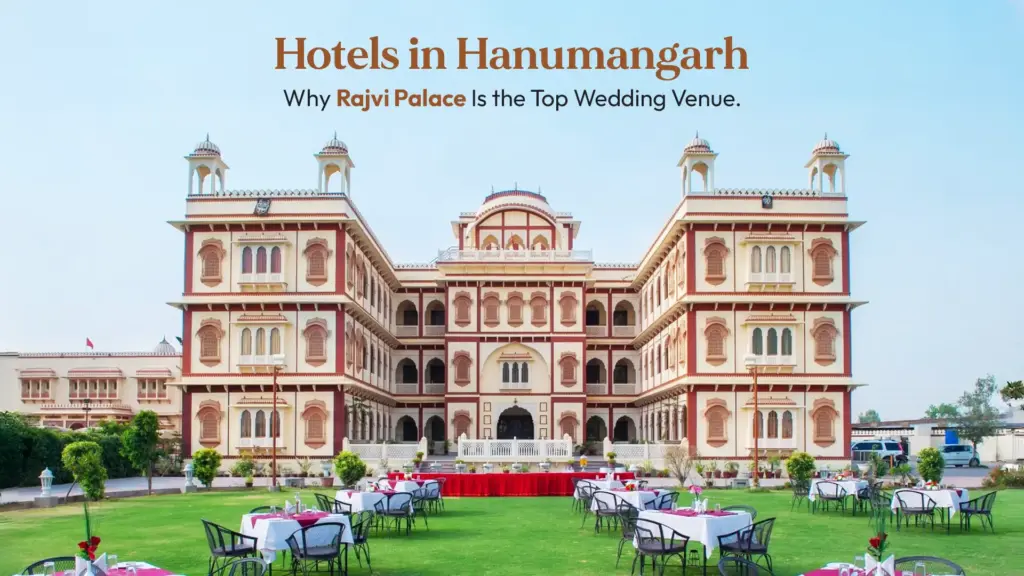
Couples who are looking for the perfect place to get married don’t just want a place to have the ceremony. They want a place where stories and traditions come to life, and every corner feels like a memory waiting to happen. There are a lot of hotels in Hanumangarh, but Rajvi Palace stands out for all the right reasons. This old hotel has quietly become the most popular place for destination weddings in the area. It feels like a palace and has modern comforts. Put Rajvi Palace on your list if you want a wedding that feels both big and personal. The Story of the Rajvi Palace: A Hotel Stay with a History That Lives There is more to Rajvi Palace than just visiting. It’s a place where the royal history of Rajasthan and modern day parties come together. This heritage hotel feels real, unlike most banquet halls, which feel fake. The buildings are very pretty, and the open courtyards are full of history. All of these things make the wedding seem like it will never end. This is one of the main reasons why Hanumangarh is a great place to get married. Wedding Venues at Rajvi Palace: Places with Stories to Tell There are a lot of good reasons to choose Rajvi Palace, but one of the best is that it has a lot of different places to hold events on the same property. Every room has its own style, so couples can plan events that last more than one day without having to do the same thing over and over. The Darbar Hall is 10,000 square feet in size. The Darbar Hall is perfect for big indoor ceremonies because it feels like a royal event. It has high ceilings and beautiful rooms, which makes it a great place for formal events like receptions. Swarn Mahal Swarn Mahal is a fancier but more private place for pre wedding parties like engagement parties and cocktail nights. The lawn at the Palace is 60,000 square feet. This big lawn has a lot of choices for a wedding outside. It can easily handle everything from setting up the mandap to big baraat entries. Jal Mahal Jal Mahal is a great place for couples who want a quiet, romantic place to have their haldi or mehendi ceremony. Raja Rani Bagh A beautiful garden that looks like it came from a fairy tale. It makes weddings more fun and is perfect for daytime events. All the tools you need to plan your wedding are here. Planning a wedding can feel like you’re trying to keep a hundred things in the air at once. Rajvi Palace makes it easier by taking care of all the wedding details. They offer these services: Setting up flowers and themes for decorations Catering with menus that can be changed Invitations to weddings and other paper goods Working together on video and photography This all in one method makes sure that the design, execution, and overall experience are all the same. This is very helpful for families who are moving to different cities. Stay Together, Celebrate Together: Why It’s Good to Stay Together One of the hardest parts of planning a wedding in another country is finding places for guests to stay. This is something that Rajvi Palace can easily fix. People can stay on the property, which makes the wedding a group event instead of a series of separate ones. You can be comfortable and stylish at the same time because there are luxury suite room hanumangarh options. This is what makes Rajvi Palace different from most other resorts in Hanumangarh. Guests don’t have to go to different places because everything is in one place. How to Start Planning Your Wedding at Rajvi Palace Getting started is not as hard as a lot of couples think. A well planned first meeting with the wedding team can set the tone for the rest of the planning process. On your first inquiry call, you should talk about the following: How many people do you think will come? When you want to tie the knot Prices that vary Preferences for events (inside vs. outside) Housing needs The team can then suggest the best service and venue combinations for you once they know these things clearly. One of the Best Hotels in Hanumangarh: Rajvi Palace There are a lot of hotels in Hanumangarh, but not many of them are as big, have as much history, or offer as good service as Rajvi Palace. This is what makes it unique: The real deal at a historic hotel There are a few spots on the property where events can take place. All the help you need to plan your wedding High end places to stay on the property A good name among people who plan weddings A great wedding venue is more than just a place to have the ceremony. It changes everything. That’s what Rajvi Palace is all about. At the end One of the most important things you’ll have to decide is where to have your wedding. Rajvi Palace is one of the few Hanumangarh hotels that has a mix of history, comfort, and careful planning. Rajvi Palace is the best place to go if you want everything to go smoothly and every moment to feel special. It’s a beginning.

Hotels in Hanumangarh: Why Rajvi Palace Is the Top Wedding Venue Read More »

A Royal Heritage Journey: Why Rajasthan Is Known as the Land of Kings

A Royal Heritage Journey: Why Rajasthan Is Known as the Land of Kings

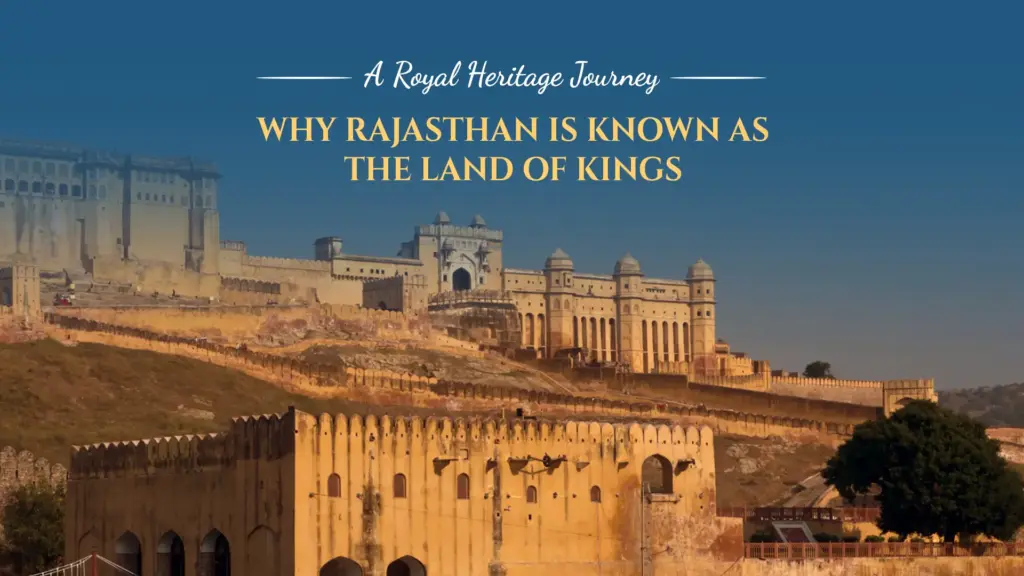
Rajasthan is one of the most interesting places in India since it has a lot of culture. The state is proud to be called “Land of Kings” since it boasts beautiful forts, stately palaces, and famous kings and queens. But what makes Rajasthan worthy of such a noble name? There are numerous stories of bravery, honor, and living in style in Rajasthan, from the strong Rajput dynasty to the traditions of royalty that will never fade. People from all over the world come to the state to see its royal history through forts, palaces, cultural festivals, and beautiful heritage hotels. This page explains why Rajasthan is known as the Land of Kings and how people can learn about its royal history. What does “Land of Kings” mean? The Hindi name “Rajasthan” means “The Land of Kings.” The name originates from two words in Sanskrit: The word meaning king is raja. Sthan means land or place. For hundreds of years, strong Rajput monarchs were in charge of this area. They established huge kingdoms and bravely fought to keep them safe. These leaders left behind an amazing legacy of buildings, culture, and traditions that still have an effect on the state today. Many kings have lived in Rajasthan over the years, which is why it is called the “Land of Kings.” This name fits wonderfully with its great past. The Royal History of Rajasthan Several strong dynasties ruled over distinct parts of Rajasthan, which helped define the state’s royal identity. Kings of War and the Rajput Dynasty People knew that the Rajputs were brave, loyal, and proud of themselves. Many well known kings and queens came from Rajput clans and ruled over big regions. These kings and queens built beautiful cities and kept their lands safe from attack. Folklore and history still tell stories about how brave and selfless they were. Rajasthan is known as the Land of rulers because of the rulers who lived there. Palaces, forts, and royal constructions One of the most remarkable things about Rajasthan is its architecture from when it was an empire. People who travel can find this all around the state: Huge forts on top of hills Big castles for kings and queens Temples with carvings that are quite detailed Beautiful gardens and yards Millions of tourists come to see the royal sites at Jaipur, Udaipur, and Jodhpur every year. These gorgeous buildings show how strong and royal the emperors of Rajasthan were. Royal Traditions That Are Still Around Today Even though there are no longer any kings or queens in Rajasthan, the state nevertheless preserves many regal customs. Visitors can still see royal customs through: Rajasthani hospitality, as it has always been Folk music and cultural festivals Food that was once served in royal homes Things that honor customs and traditions These customs let people go to a place that feels both fresh and familiar. From heritage hotels, you can see the Land of Kings. Staying at a heritage hotel is one of the greatest opportunities to see what life was like for royals in Rajasthan. Many old royal homes and palaces have been turned into high end hotels that keep their historic elegance while adding modern comforts. People staying at an old fashioned hotel can: look at buildings that seem like palaces Enjoy the royal welcome live in places where kings and queens used to live. Lose yourself in the royal atmosphere of Rajasthan. This is why heritage hotels are such a big deal for any trip to the Land of Kings. Royal Heritage Tours: Discovering Rajasthan’s Ancient Cities Many people select Royal Heritage Tours to learn more about the royal heritage of Rajasthan. They take you to the state’s most notable places. Most of the time, these trips end at Old castles and palaces Museums and temples for royalty Cultural sites and markets that are still around People can learn about the stories and legends that inspired the Land of Kings on these trips. Hanumangarh is a great place to go if you want to get away from the crowds and see Rajasthan’s history in a more true way. At Hanumangarh’s Rajvi Palace, you can feel like royalty. Rajvi Palace is a beautiful place for guests to stay in Hanumangarh that shows off the regal customs of Rajasthan. The hotel has a nice style that is influenced by the past. Guests can enjoy the beauty of the Land of Kings in a quiet location. Guests can have: Luxury rooms that are comfortable Rajasthan: Service with a grin Beautiful rooms that are inspired by royal buildings Hanumangarh is an old city that feels calm. If you stay at a place like Rajvi Palace, you’ll get a taste of what life was like for the Rajasthan royals. Conclusion It’s not just a fancy name for Rajasthan; it really is the Land of Kings. It shows hundreds of years of royal history, strong rulers, great palaces, and cultural practices that have lasted. The state preserves the memories of its monarchs alive in every way, from stately palaces to royal traditions that will never die. People who visit Rajasthan now can still observe this royal legacy in forts, cultural festivals, Royal Legacy Tours, and stays in heritage hotels that will stay with them forever. Rajasthan is a lovely region where history, culture, and royalty all come together. You can go to old cities or enjoy the tranquil beauty of Hanumangarh.

A Royal Heritage Journey: Why Rajasthan Is Known as the Land of Kings Read More »